
- Posted
The Art of Hair: Inside Tom Connell’s Creative Process
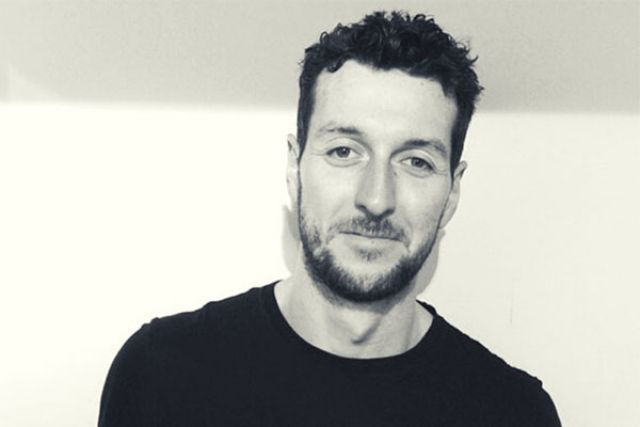
Tom Connell, Davines’ trailblazing Hair Art Director, has a distinctive approach to creating photographic hair collections. His method is a blend of technical expertise and a creative vision that goes beyond traditional hairdressing: focusing on commercial work and crafting creative imagery.
“When it comes to commercial work, I treat the hair like a partner in the creative process and use the analogy of having a conversation with the hair, allowing it to guide me toward its natural movement and shapes. The hair knows much more than we do about what it wants to do, and this philosophy avoids rigid sectioning and clipping, which restricts the hair's natural flow. I tend to sculpt hair organically, making sure the final style is both wearable and dynamic, but to do this you need a solid grounding in technique; you have to know the rules before you can start to break the rules."
Your philosophy and approach to hairdressing
My approach to hairdressing is probably two-fold, if I'm working commercially and when working on images of hair that is designed to be wearable and used in the salon, then I have the approach that the hair knows much more than we do about what it wants to do. I like to use the analogy of having a conversation with the hair when I'm cutting the hair, I'm stepping back and playing with the hair and trying to understand what movement and what organic shapes the hair wants to have. I don't believe in lots of sectioning and twisting away the way the hair and clipping the hair up, I think that puts a gag on the hair in that conversation that I'm trying to have with it, so I'm trying to let the hair tell me and guide me with what it wants to do and sculpt that shape quite organically. Now to do that you need great technique, you have to know the rules before you can start to break the rules.
When I'm working creatively on images then it's just about an idea that I haven't seen before, I'm trying to take two to three things that would never normally meet and reframe them into one image and reframe them into a new conversation. So it could be a type of music from one part of the world mixed with a type of clothing style from another part of the world, mixed with a vintage photography style, and when you put all of those elements together whether it's combining hair cutting with hairdressing, that's where the best and the freshest and the newest ideas that I've ever created come from.
When did you know that you want to be a hairdresser? Who inspired you to become one?
It was at that Trevor Sorbie show when I was 15 that I knew I first wanted to be a creative hairdresser working on stage. But it was my dad that first inspired me to become a hairdresser, watching him work and the passion that he spoke about the industry in, it really caught my attention. From a young age when most dads were telling their sons about famous footballers my dad was telling me about Vidal Sassoon and Trevor Sorbie and Anthony Mascolo so it romanticised the industry very early to me.
Where and how do you get your inspiration now?
There isn't one set place, I have a file of ideas and my process is if something catches my attention I make a note of it, I document it, or photograph it, or write it down and put it into my file. So that could be a texture, a colour pattern, a song I hear, a style of cinematography in a film, something funny that I over hear in a bar, anything that I feel like I can use, if something makes me look twice I look a third time, document it and put it in my file of ideas. Then roughly every two months I'll sit down and I'll try to make a connection between those ideas and inevitably my imagination is sparked. We're all exposed to the same cultural things – music, film, TV, fashion and when you notice those things and you start to look through the ideas there's inevitably a connection and those connections start to develop an idea for a shoot, or an idea for a show, or an idea for a hair image and that is the most purest, most organic way to produce work that is very original to me and I think when if you want to have a successful career in the creative side of hairdressing you need to produce work that is recognizably yours.
What will you do if you lost your inspiration for doing hair creation, how do you overcome the difficulty?
If I lost my inspiration for doing hair; and it happens frequently, the only thing I can do then is trust the process that I have. So as I said earlier I'm always putting ideas in my file. If I ever sit down and look at those ideas and I can't really see a connection then the only thing after that is just carry on with the process of putting new things in it, if there's no idea in the melting pot of ideas which is my file then I clearly just need to add more ideas. I’ll put myself in situations where there's a bigger chance that I'm going to notice something interesting, that could be visiting an exhibition, that could be watching some interesting documentaries, cultural movies so that gradually adds something to you rather than just entertain you. Listening to new music, reading new books, push yourself into an environment that gives you a greater opportunity and that you can pull something from. That would be my process if I ever felt a lack of inspiration.
What is in a name: the thinking behind collection names, why they matter, what do they need to say, the deeper meaning of a name.
“The names and the names of the show are as important as the hair and the images. To come up with the names, I just document anything and everything – signs I notice, something I hear in a bar, a line in a TV show…I’ll document it and put it in a physical file. This builds up over time and then when I sit down once every couple of weeks to look through, it’s inevitable that some of those things will have made a link.
For N11 Street I was shooting at Davines House in Brooklyn, and this project was nice as we didn’t have any expectation, such as number of images or themes etc. When you shoot with a strict timetable you reduce the possibility of something happening so you can’t explore too much. We went in with 5 models, had 20/30 sketched and I knew I wanted to shoot in high contrast black and white but that was it, so we just played around. I’d cut a little bit, then shoot, so it was named literally after the ideas that were shot on N11 street.
For With The Band I wanted a musical element to it but obviously you can see where the name came from! I imagined that the designer had created a headband accessory, so we colour matched it to the pattern and depth of the clothes. I wanted to shoot very naturally as it’s as Avant Garde as I’d ever get, so we used a soft light, by a window, making it milky and soft as ideas were bold for what I’d normally do.
Mono-chrome Dome came from having a beer after we shot, at this point we didn’t know if it was one story, two or three. We thought that they were all different: classic, strong, crazy…so the hair didn’t have one theme. The only similarity is they are all in black and white, so we wondered about what another word for a head would be. Someone suggested “dome” so Mono-chrome Dome was born!
Importance of music:
Music is so important to everything I do and I make a playlist for every show or collection. A lot of time the music comes first; there had been a finale song I had wanted to use for ages so that came first in the last show I did. The opening song I used for that show also came first, when I heard Arctic Monkeys Sculptures of Anything Goes I knew that had to be the next show I did. There is also a point in this song where there is a gasp, so at every shoot I did last year, on the last shot I got I asked the model to gasp on camera – we even turned it into competition on who did the best gasp!
Sometimes it can take me a while to hear the right music. When I was shooting With the Band, I had a Paul McCartney song on with the artwork on Spotify playing in the background which was of a record spinning around. Obviously with the headband theme and seeing this, it gave me the idea of the title, but I couldn’t immediately think of the right music. So I got on my bike, cycled around listening to music on shuffle and found the Black Puma song I then used.
A good selection of hair images cannot work with the wrong music on a stage, you need layers to give the right feeling for a show. I don’t think it is enough to just show the technique, I think you need to explain the why and the process behind everything, then the audience can take that process and create something for themselves. Everything from the way the light is on stage, making sure you are in touch with the stage management weeks ahead of time so they understand your vision…everything matters, you can’t just show hair ideas and clothes anymore - for so many years it’s been “spectacle over substance” with no depth beyond the aesthetic, but I think that era is going and things that are more thoughtful resonate more with the audience.
What do you feel most proud of being a hairdresser?
I feel proud of being a hairdresser because it's a heritage industry with a great legacy behind it. I feel proud that I'm carrying on in the line of other hairdressers that have gone in the past that I admired. I feel proud when anyone mentions my name in the same breath as some of the people that I used to look up to. If other hairdressers can look to what I do and take some inspiration or some ideas from then that's what I feel very proud of. I think we're an industry that never stops, there's great people gone before us, there's great people here now and they'll be even greater people coming through and if we can all take from the previous generation and pass down to the one that's coming after us, that means that the industry is will remain in a healthy place.